RISE Research Institute of Sweden Design Research, Service Design, Interaction Design

Using AR and Urban Digital Twins to build trust in citizen dialogues

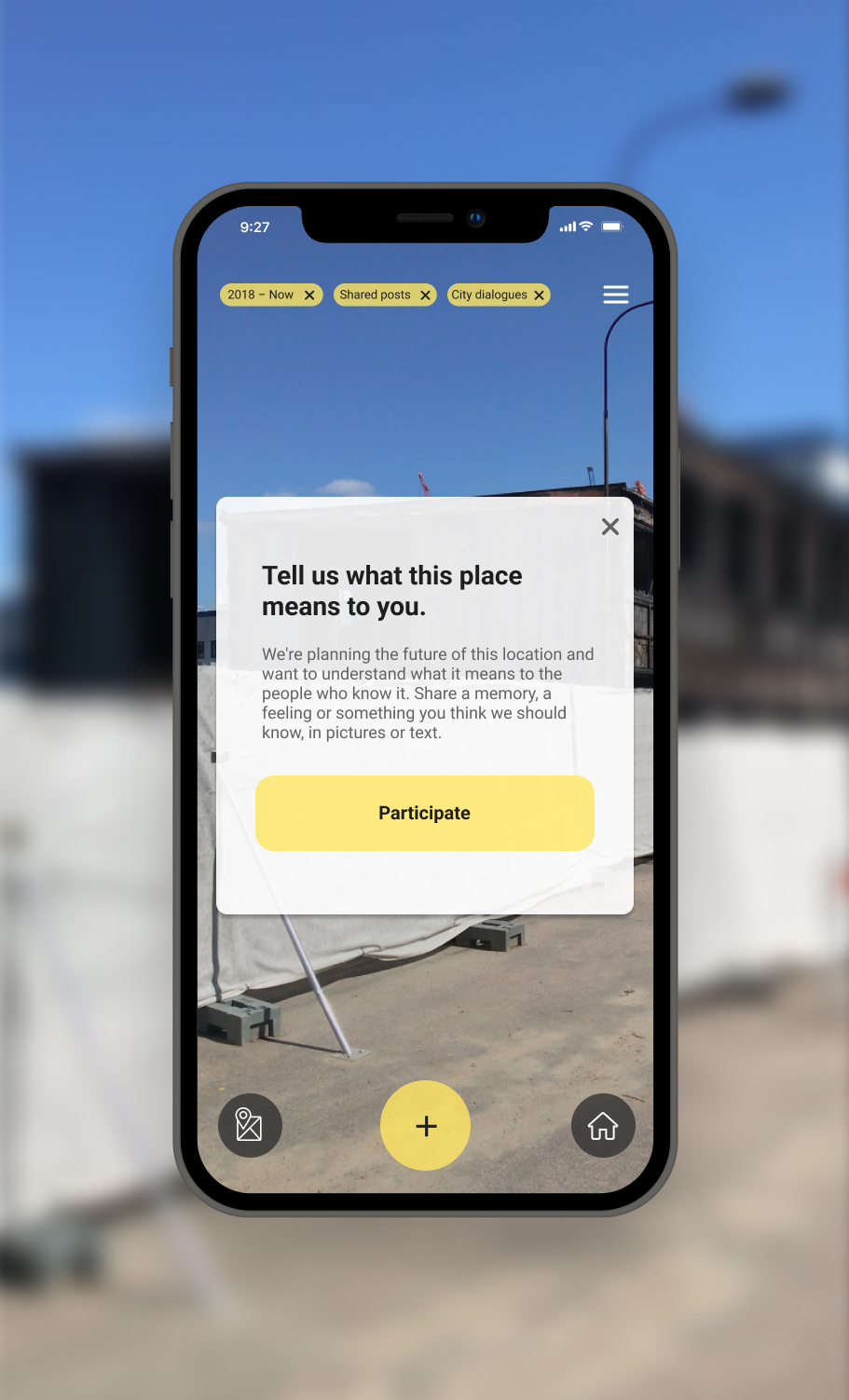
Augment Your City city-side screen — placing a location-specific question as part of the Social Consequence Analysis process.
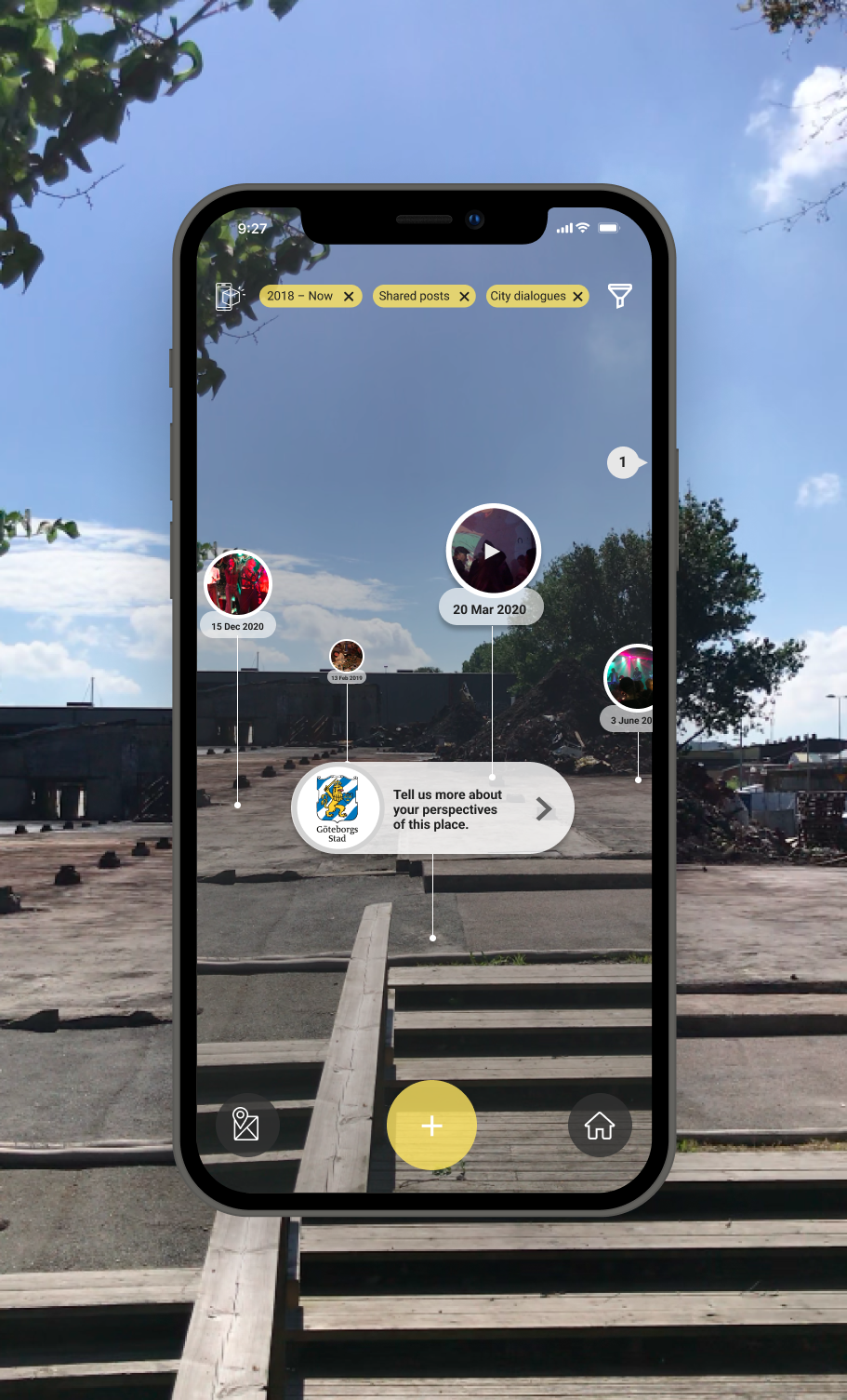
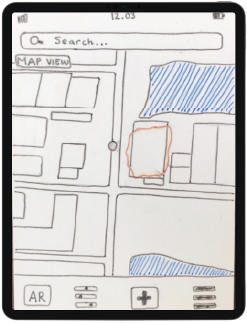
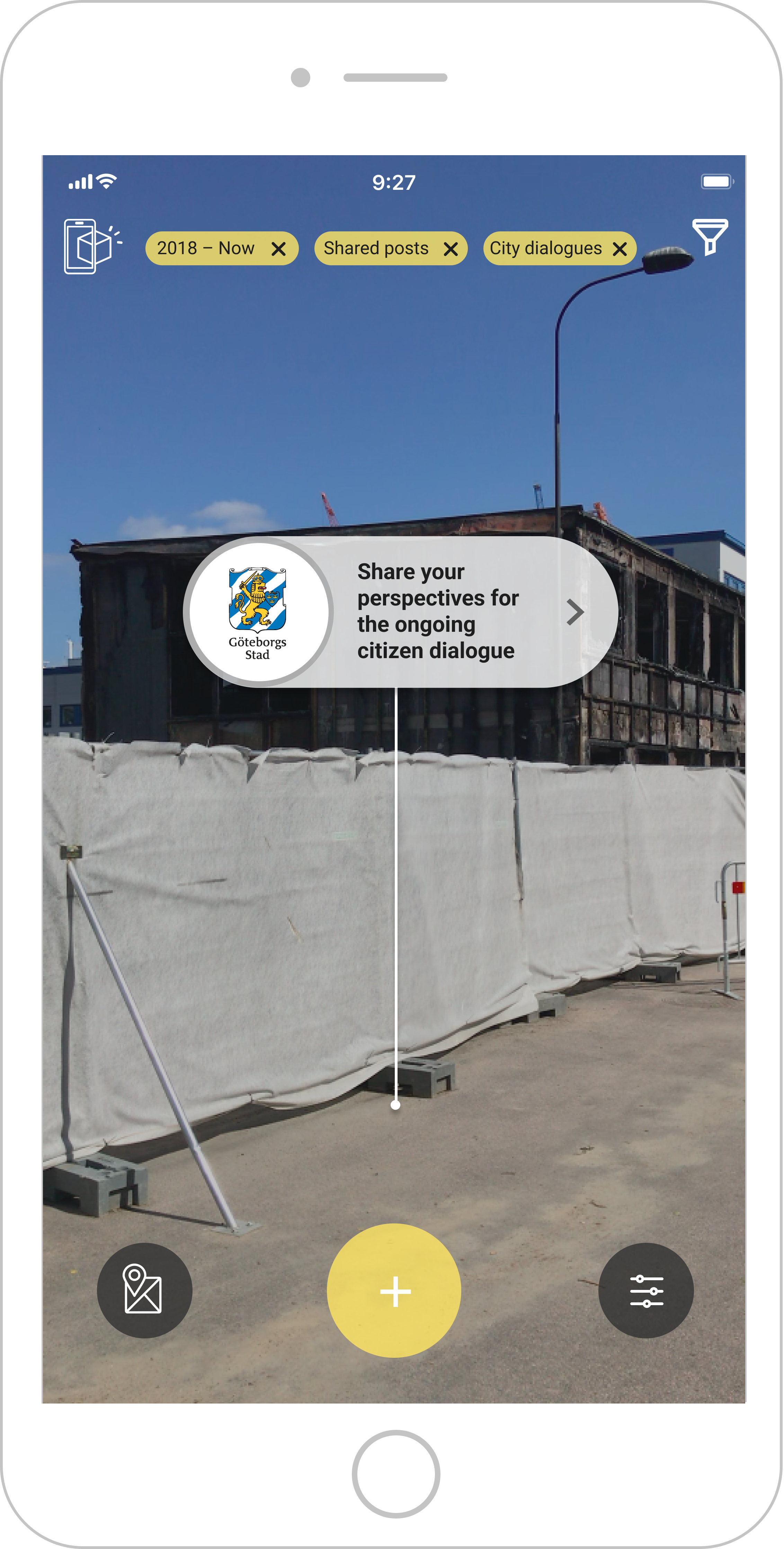
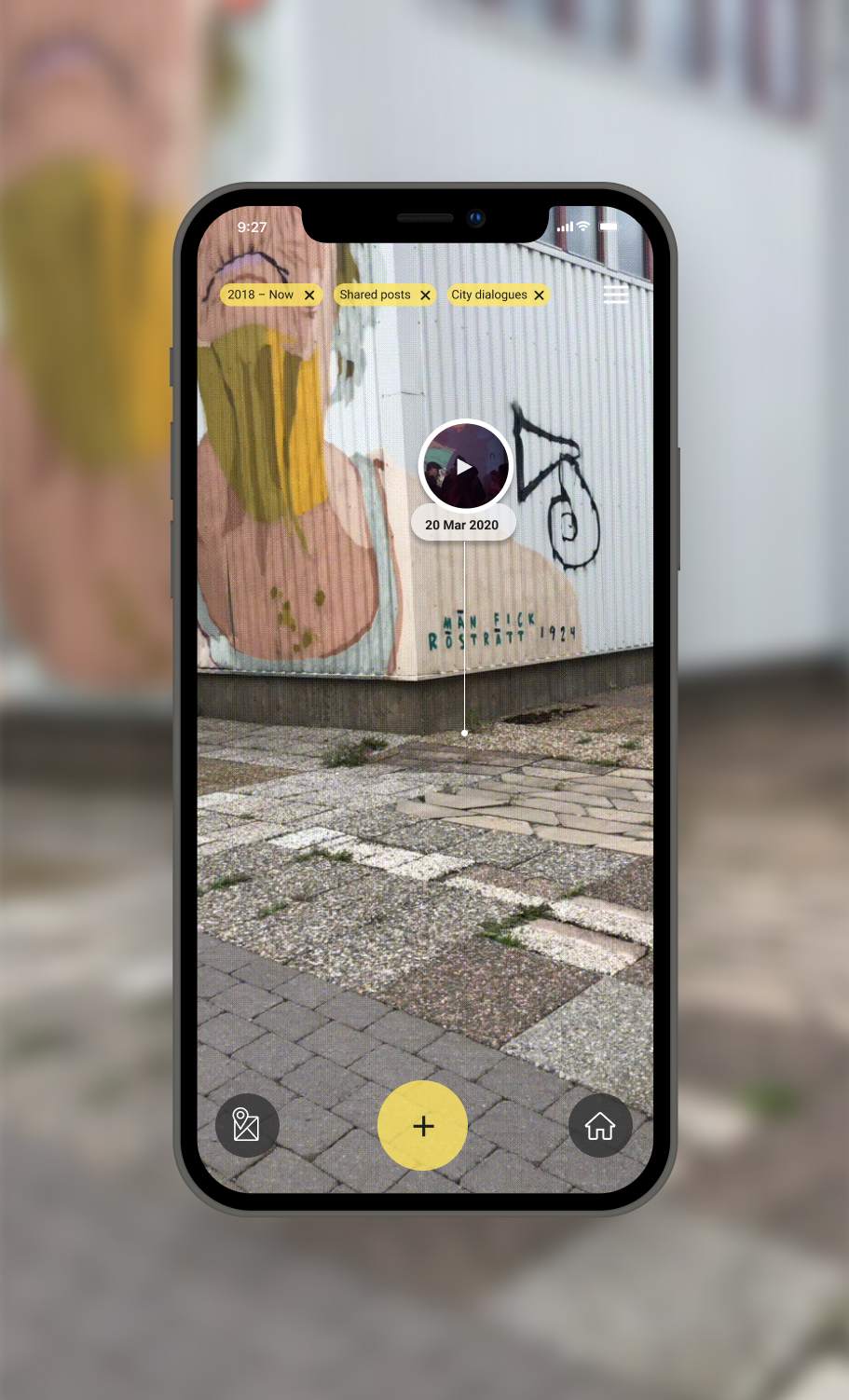
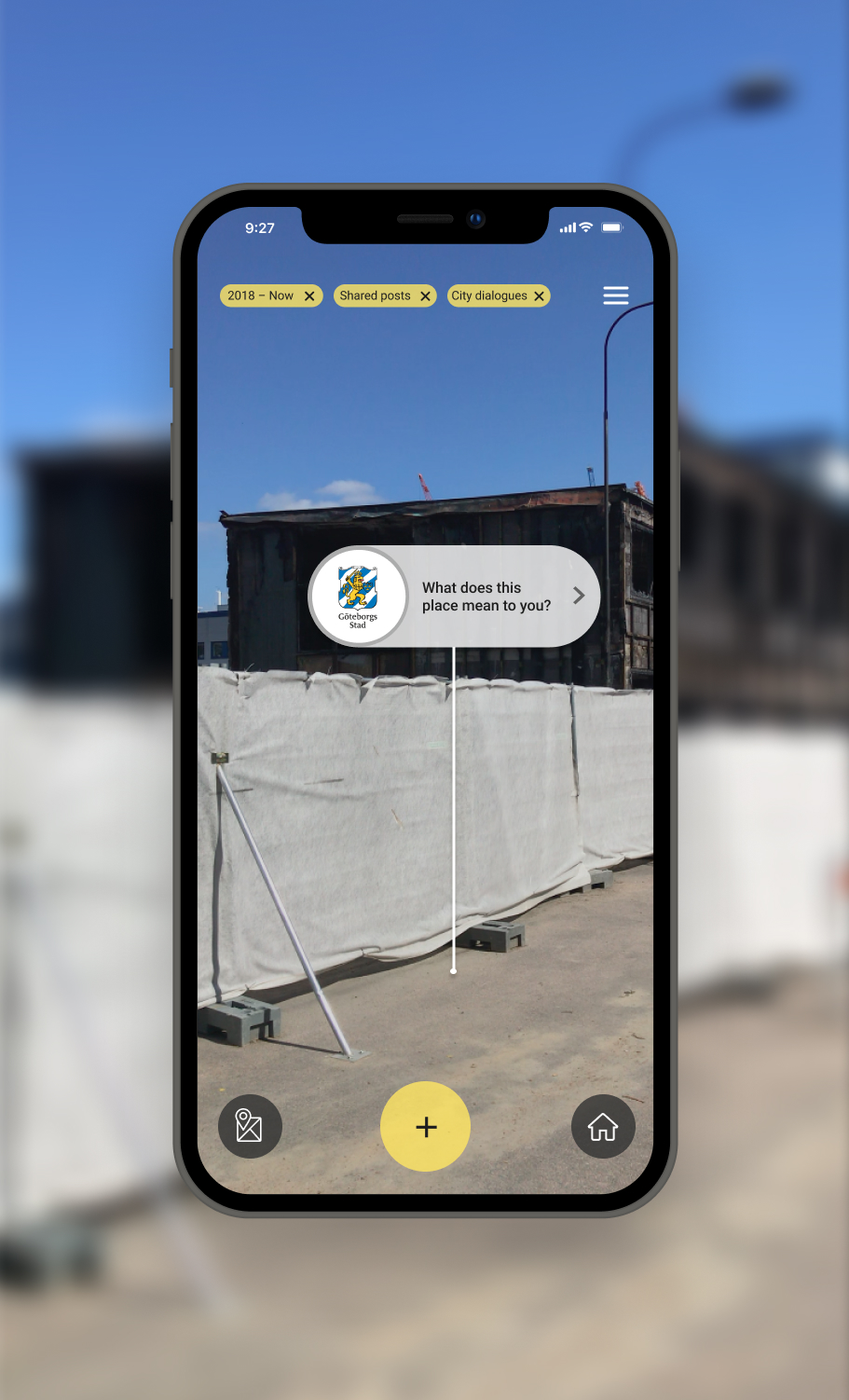
Augment Your City citizen-side screen — the AR map view at Ringön with location markers.
Augment Your City — both sides of the platform together, citizens and city officials meeting around shared place-based content.

A pilot project within the Vinnova-funded Virtual Gothenburg Lab, led by RISE Research Institute of Sweden and the City of Gothenburg's Social Resource Management. The project explored how Gothenburg's city-scaled digital twin and AR could support citizen dialogue around the social and cultural values tied to places in the city. I led interaction design and UX research across five months, from fieldwork at Ringön through to a tested prototype. The outcome was Augment Your City, a citizen dialogue tool connecting residents and city officials to Gothenburg's digital twin through place-based AR content. The project was recognised as Best Thesis Project 2021 by STIMDI and is featured in Geodesign, Urban Digital Twins and Futures (Routledge, 2025) as an example of how citizen input and local knowledge can inform more inclusive urban planning.

Role Lead Interaction Designer & UX Researcher
Time 5 months · 2021
Team Sole designer — thesis project Embedded within the VGL team at RISE: project lead, researchers, city planners, developers
From the team

“Throughout our collaborations during Sanna’s time at RISE […] I have experienced Sanna’s extensive knowledge and skill as an interaction designer. Whether it comes to questioning assumptions of a design problem […] or involving crucial and overlooked stakeholders at different levels of participation, Sanna was a reliable colleague and a source of inspiration. As a designer, colleague and friend, I cannot recommend Sanna Klefbom enough.”

László Sall Vesselényi, Interaction Design Researcher, RISE

Problem statements

Two gaps: dialogues reached too few, and lived values had no place in the digital twin.

User problem

Cultural practitioners in Gothenburg were being pushed out of areas they had built, as urban development changed the conditions they depended on. They had no meaningful way to communicate the social and cultural values of the places they worked in to the city, and felt excluded from the planning processes that affected them.

Business problem

The City of Gothenburg's citizen dialogue processes reached a limited group of people and provided no feedback loop to participants. Virtual Gothenburg, the city's digital twin, represented the physical and infrastructural data of the city but had no way to capture the social and cultural values of places, which were central to the social sustainability goals the city was working toward.

Impact

Best thesis 2021

The project was recognised as the strongest interaction design thesis nationally

STIMDI, Swedish Association for Interaction Design

Academic recognition

The work has been used by researchers to advance thinking on participatory digital twins and cultural heritage

Geodesign, Urban Digital Twins and Futures, Routledge 2025 · Springer LNCE 2025 · Politecnico di Milano 2024 · HDK-Valand 2025

Approach and rationale

The problem was about power and representation, so the methodology had to reflect that.

The project took a critical and democratic stance toward technology development, questioning smart city design that is data-driven and removed from the people it affects. To understand Ringön on its own terms, the work combined ethnographic fieldwork, cultural probes and co-design: methods chosen to let participants' perspectives take a central place rather than extracting data from them. The Urban Digital Twin was already operational, shaped by values of efficiency and technical infrastructure, which made the design question not about building a new system, but about whether an existing one could be extended to hold what it currently could not.

Research

Understanding Ringön meant being there and talking separately to the people who lived it and the officials who planned it.

Ringön is an old industrial harbour area on the island of Hisingen in Gothenburg, home to a mixed community of artists, breweries, mechanics and cultural organisations. It was also beginning to attract attention from urban developers. Two groups had very different relationships to that situation: the cultural practitioners who depended on Ringön's conditions to do their work, and the city officials responsible for the planning processes that would shape its future.

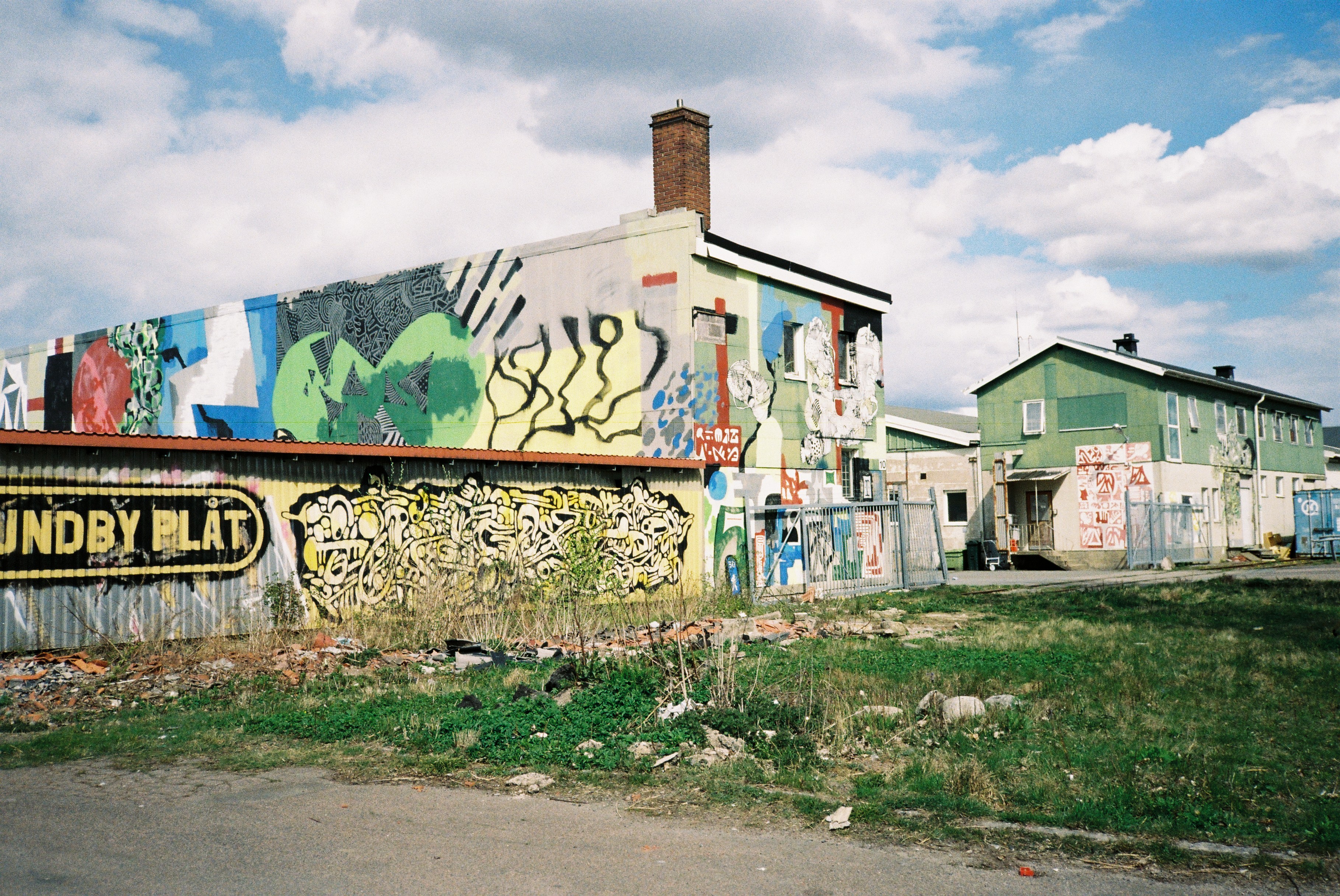
Ringön street view: graffitied warehouses with a green house behind, the Lundby Plåt sign visible — the industrial harbour area where the fieldwork took place.
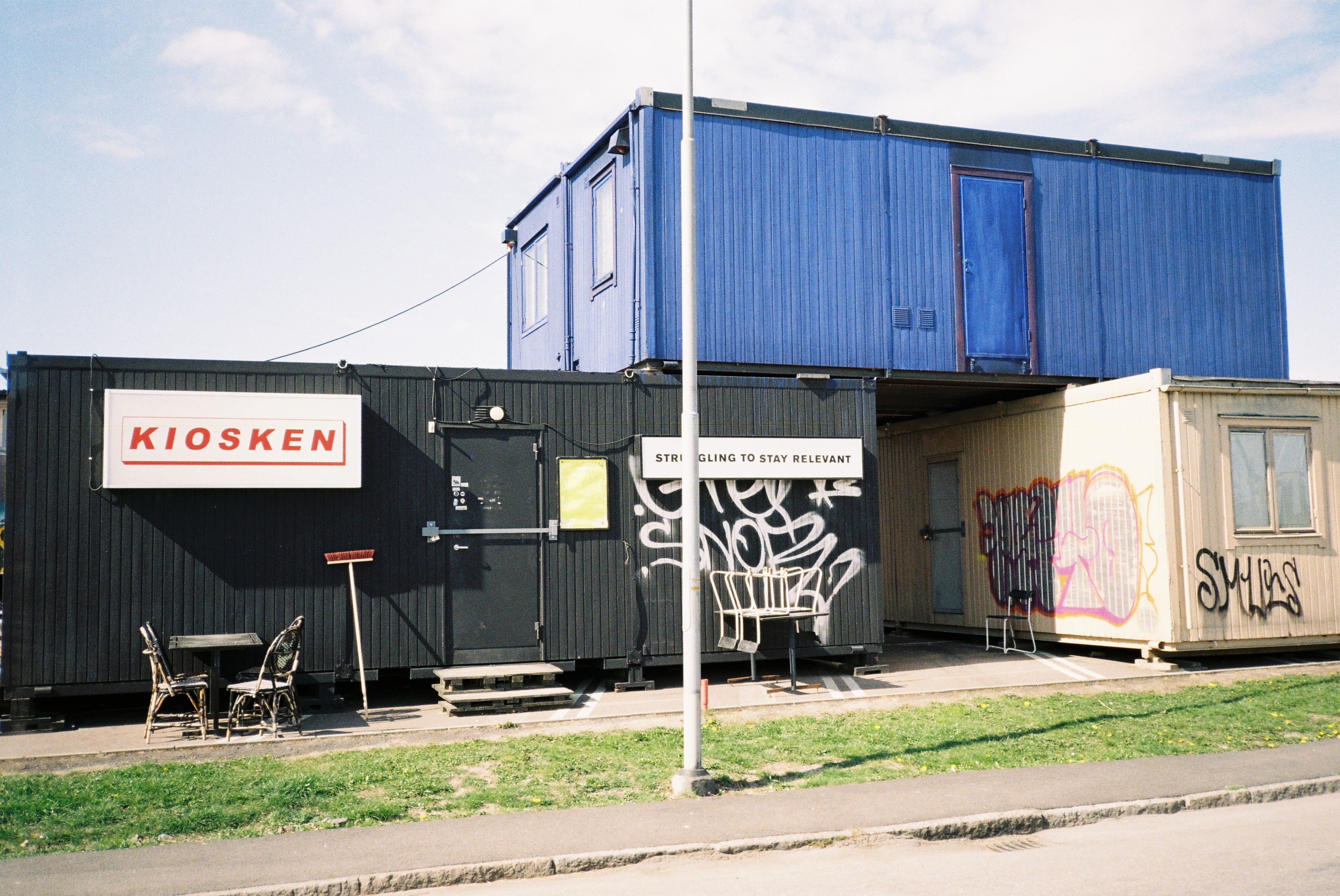
Kiosken at Ringön: a black shipping container with the Kiosken sign and a 'Struggling to stay relevant' notice on the door — the cultural hub run by participants in the research.
Desktop research Literature review and desk research to frame the problem space, covering academic research, authority reports and local news, before entering the field.
On-site fieldwork Observations and contextual inquiry at Ringön over several weeks, spending time in the place to understand how people used it, what they valued and how they talked about its future.
Interviews Structured conversations with cultural practitioners who had experienced urban development in Gothenburg, and separately with city officials at the traffic and cultural departments working with citizen dialogue and Social Consequence Analysis.
Cultural probes A three-day probe sent to Gothenburg residents, designed to understand how people express feelings about the places they care about, informing both the research and the design direction.

Interviewing both groups separately made it possible to understand the same planning processes from two very different positions.
Discoveries

Ringön's identity depended on factors that looked like problems in the data.

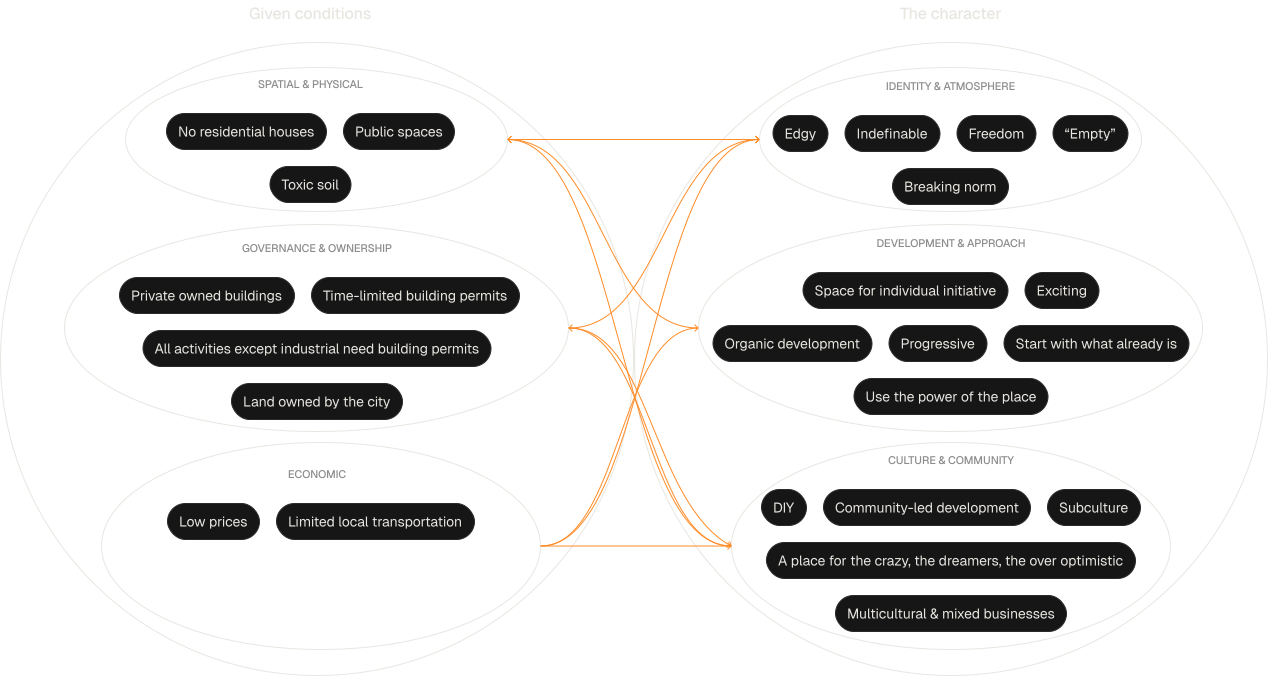
Bringing the material together through affinity diagramming showed that the most significant finding had not come from any single method. It emerged from the connections between them: the concrete, measurable factors that shaped Ringön were also the invisible scaffolding holding its community together.

01

The contaminated soil keeping development away was also keeping the community alive.

Mentioned repeatedly across fieldwork and interviews, the toxic soil made the land too expensive to develop for housing. That kept premises affordable, which kept cultural practitioners able to work there. A liability in infrastructure data was holding an entire community in place.

02

Virtual Gothenburg represented the physical city but not what it meant to the people living in it.

The digital twin held data about land ownership, building permits and soil contamination as infrastructure facts. What it could not represent was why those facts mattered: that public land enabled community initiative, that time-limited permits made space for experimentation, that contaminated soil had become the unlikely foundation of a creative district. The values were real and consequential, but invisible in the data.

03

City dialogue methods consistently reached the same people and left participants without feedback.

Interviews with city officials revealed that existing methods depended on citizens engaging with formal processes at the right moment in a long and opaque planning timeline. Many suggestions arrived when they were already irrelevant.

04

People expressed feelings about places through personal, visual and location-specific content.

The cultural probes showed that when people documented places they cared about, they used pictures, text and video tied to specific locations — not structured forms or official channels. The format of expression mattered as much as the content.

Affinity diagram from the synthesis: concrete factors at Ringön — toxic soil, public land ownership, time-limited permits — connected to the social and cultural values they held in place.

Insights

Seeing an opportunity in using Virtual Gothenburg to visualise the dependencies between conditions and identity at Ringön.

Discovery 01, 02

How might we make the social and cultural values of a place visible in the city's planning processes?

The research showed that these values existed in relationships between concrete factors and what those factors enabled, not in the data itself.

Discovery 03

How might we help the city reach broader citizen participation without requiring people to engage with formal processes they distrust?

Existing methods consistently reached the same narrow group, with no feedback loop and no way for citizens to know when their input was relevant.

Discovery 02, 04

How might we use the digital twin to connect citizens and the city around the values of places, in ways that feel natural to how people already express themselves?

The research showed that when people documented places they cared about, they used pictures, text and video tied to specific locations. The opportunity was to bring that way of expressing place into the digital twin.

Explorations

The explorations moved from ideas about location-based content to AR as the material that could bring the digital twin into the physical city.

RISE ideation workshop

A first direction emerged: location-specific content that citizens could contribute to the digital twin.

With the HMW questions and the matrix of connections between facts and concerns as a starting point, a workshop with colleagues at RISE generated the first ideas around what digital technology compatible with Virtual Gothenburg could look like.

Iteration

Direction set: geo-based, location-specific content contributed by citizens.

QR code prototype

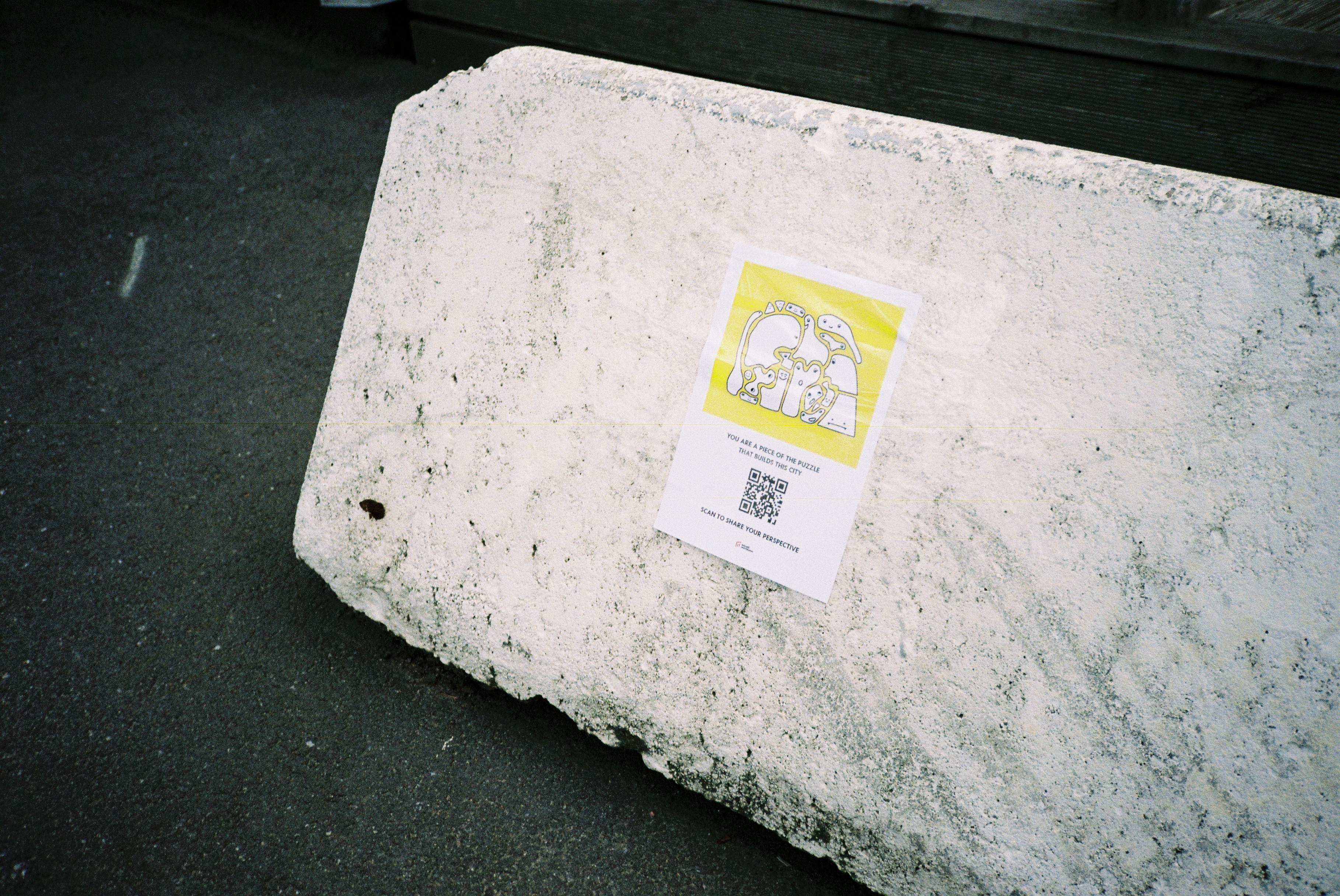
50 QR codes placed across Ringön generated only two responses.

The prototype invited people to share feelings about the place. The insight was not about the content but about context: people at Ringön moved by car or bike, going directly to work. A fixed, location-tied interaction requiring time to stop and reflect did not fit how people actually used the place.

A yellow flyer with a QR code and a hand-drawn puzzle-piece illustration, taped to a concrete block at Ringön. The text reads 'You are a piece of the puzzle that shapes this city — scan to share your perspective.'
Iteration

The next direction had to be mobile, flexible and fit how people already moved through the place.

Paper sketches and wireframes

Social media-style sharing emerged as the right format for the concept.

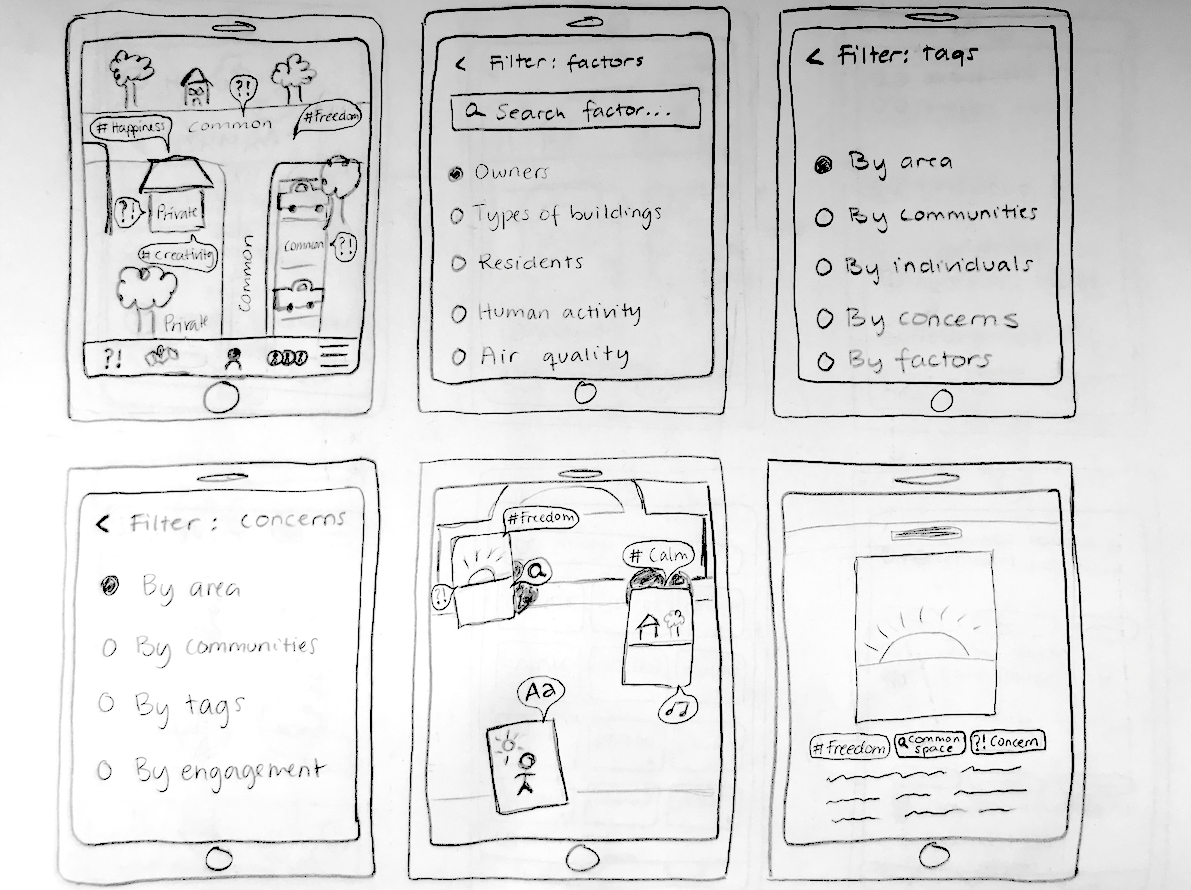
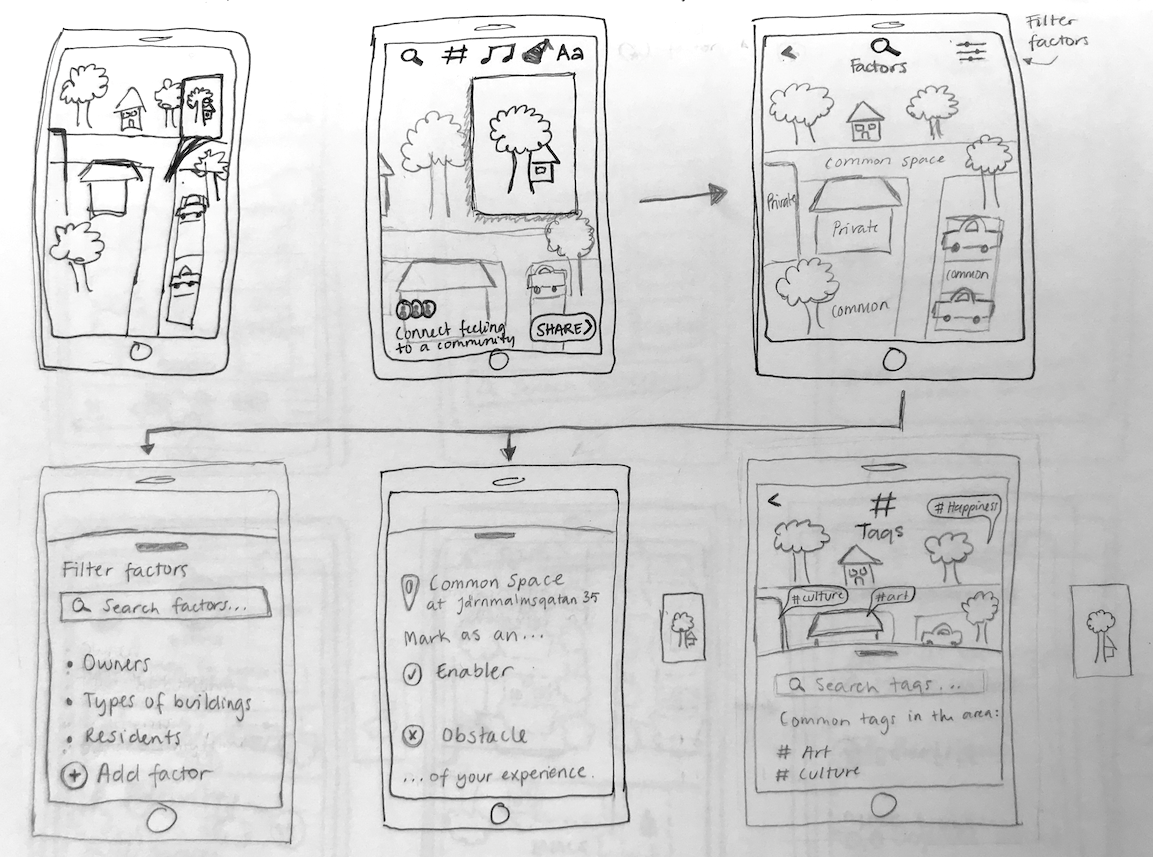
Sketches explored how the digital twin could visualise connections between concrete factors and social values. These fed into interactive paper wireframes of an app concept where citizens could share location-tagged content, using the social media interactions research showed people already used naturally to express feelings about places.

Pen-and-paper sketches exploring app flow — phone-shaped screens drawn by hand, showing early concept states.
Pen-and-paper sketches exploring app flow — additional phone-shaped screens and connections between them.
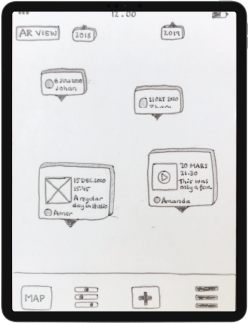
Paper wireframe of an early AR view screen with location-tagged content cards.
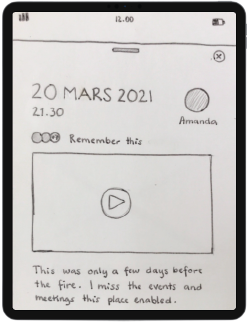
Paper wireframe of an Augment Your City app screen.
Iteration

Further explore AR for civic engagement, social media functionality, and community organisation.

Digital wireframes and AR

AR anchored the concept in the physical world, making the digital twin present in the places it was about.

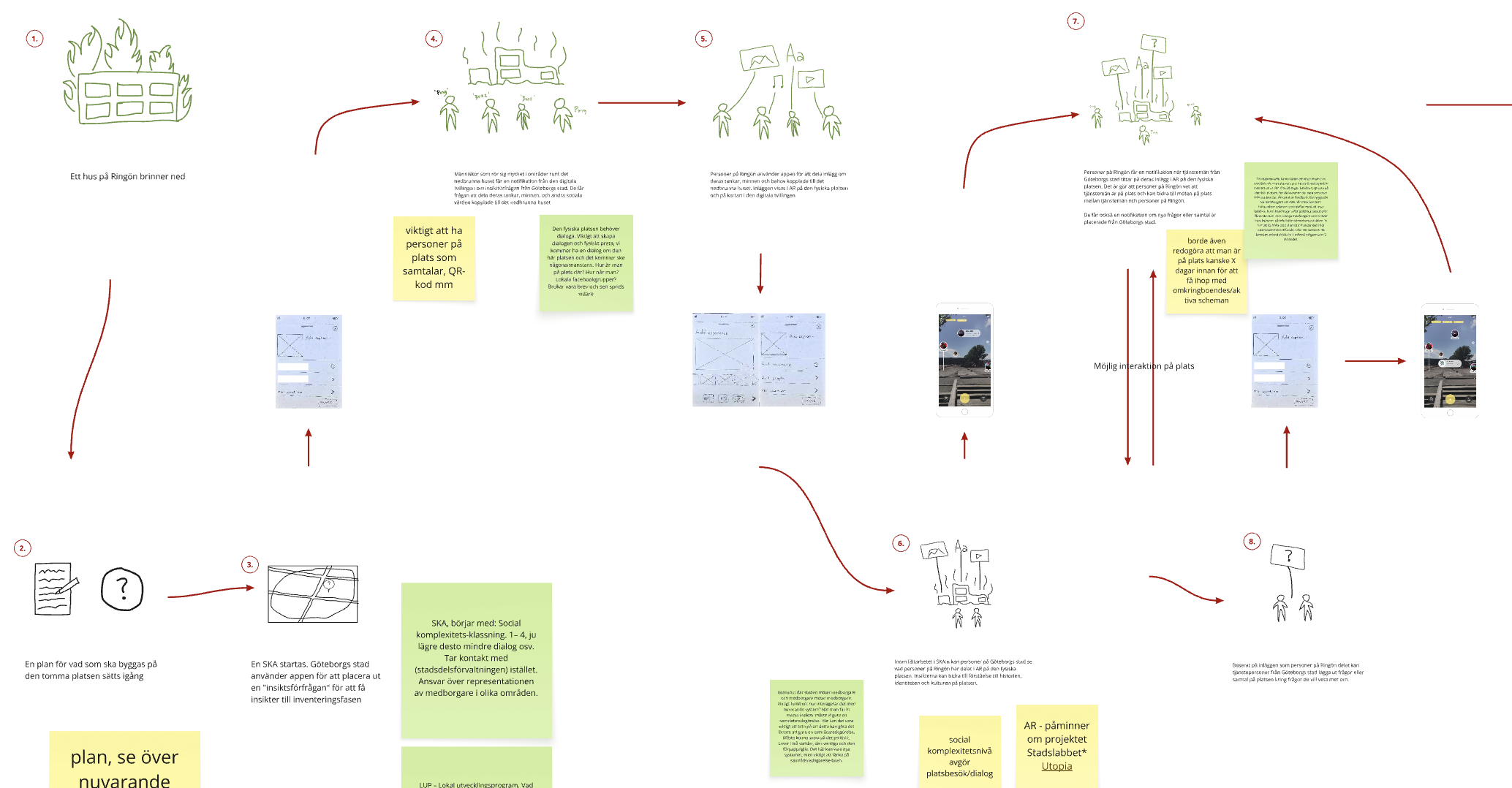
As the concept developed into digital wireframes, AR emerged as the right material. It let people share and experience content at the exact location it belonged to. A user scenario built around the burned-down warehouse at Ringön made the concept concrete: what would it mean to express memories and concerns about that place, in AR, at that location?

This scenario became the foundation of Augment Your City, a smartphone application concept connecting citizens and city officials to Virtual Gothenburg through location-based AR content.

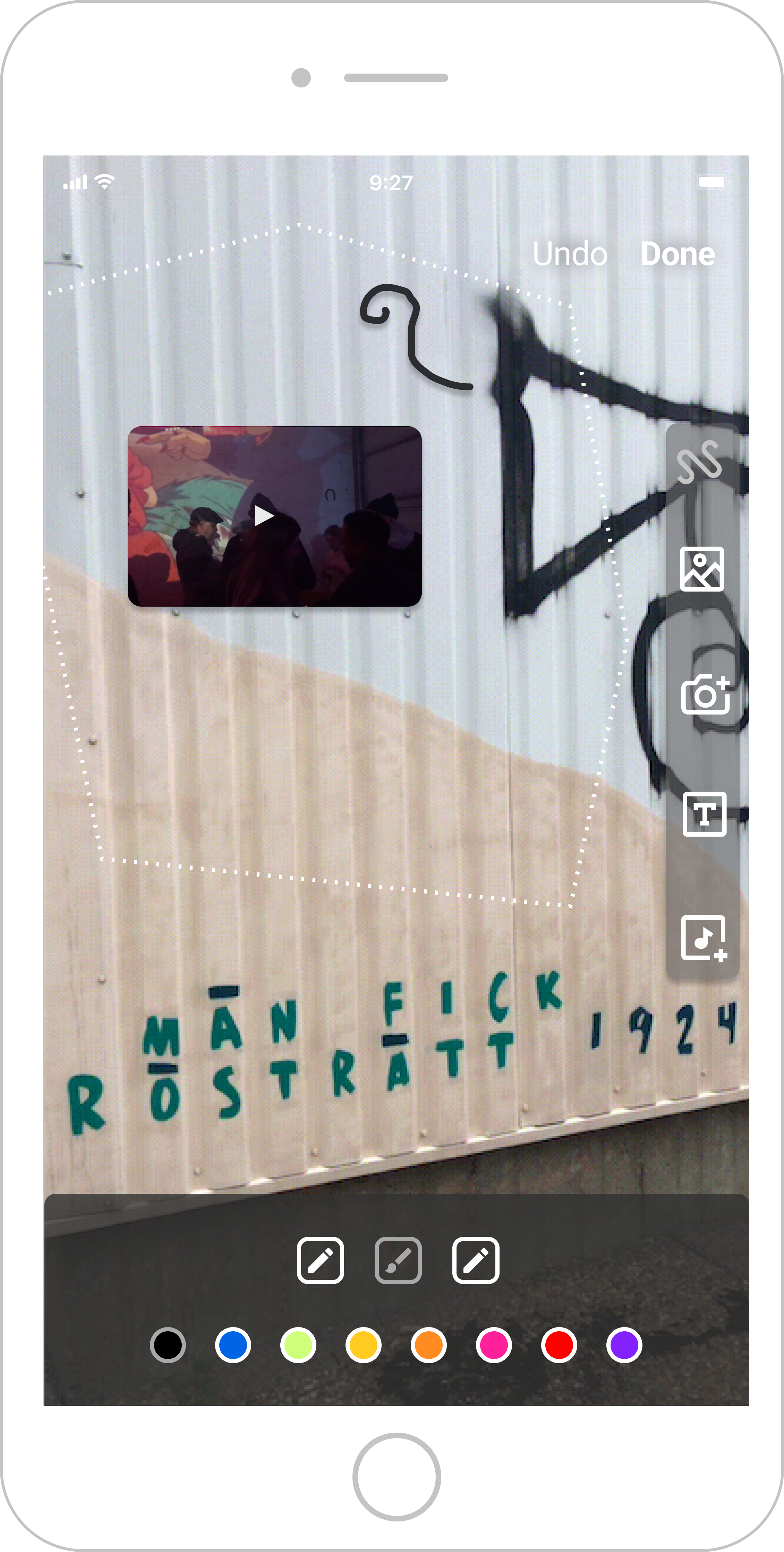
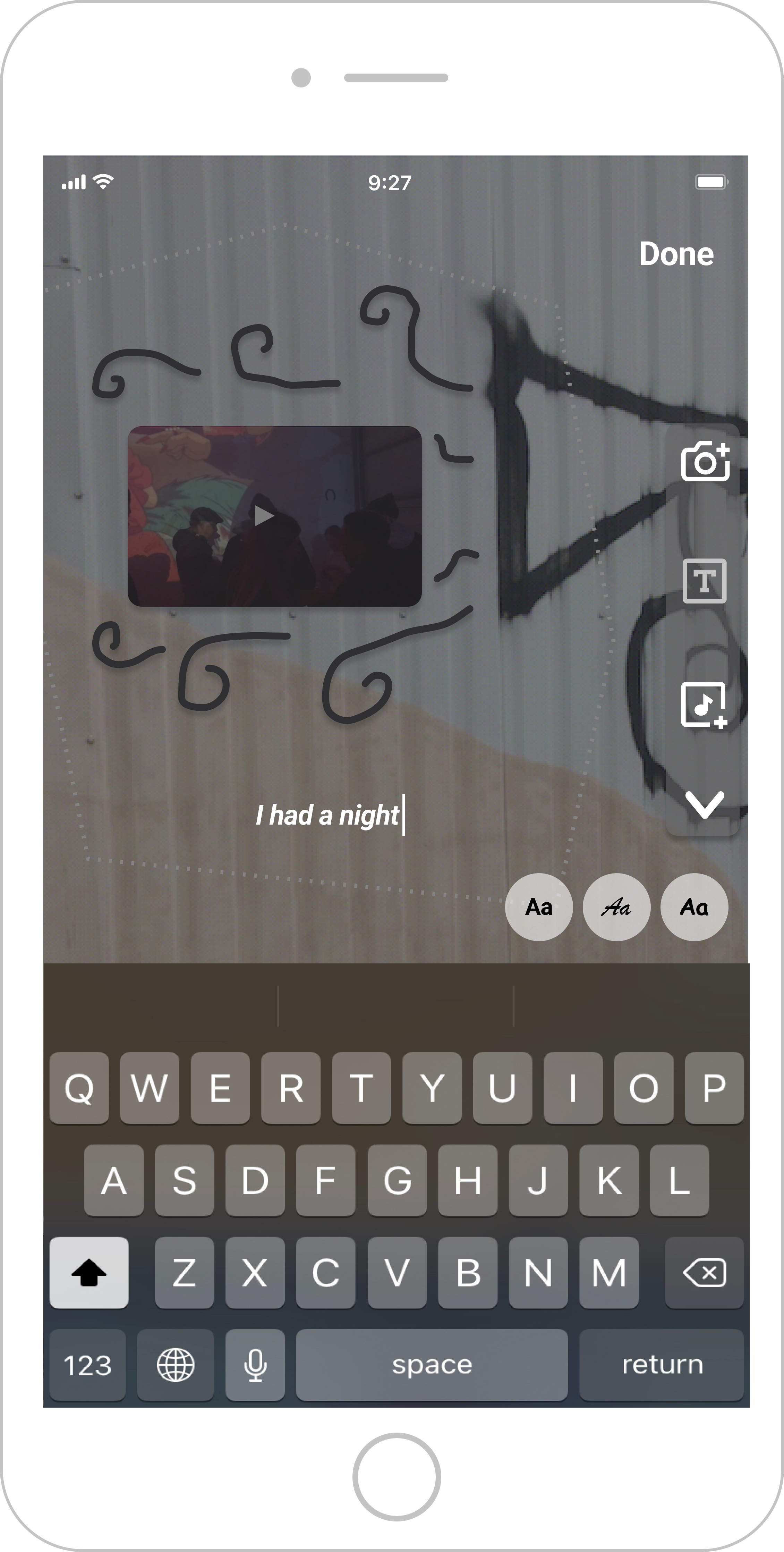
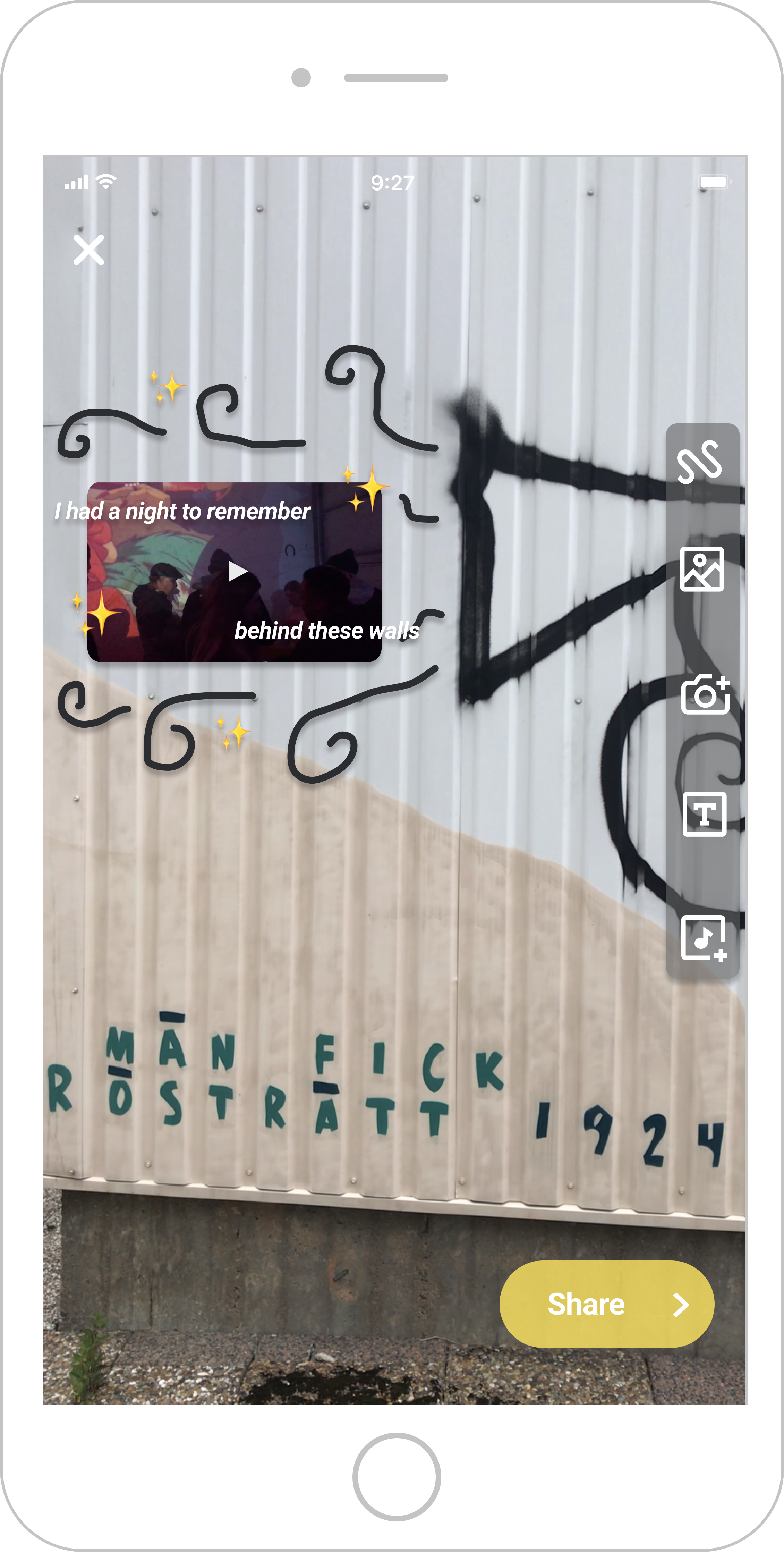
Citizen-side AR content creation — drawing lines on a location at Ringön in AR view.
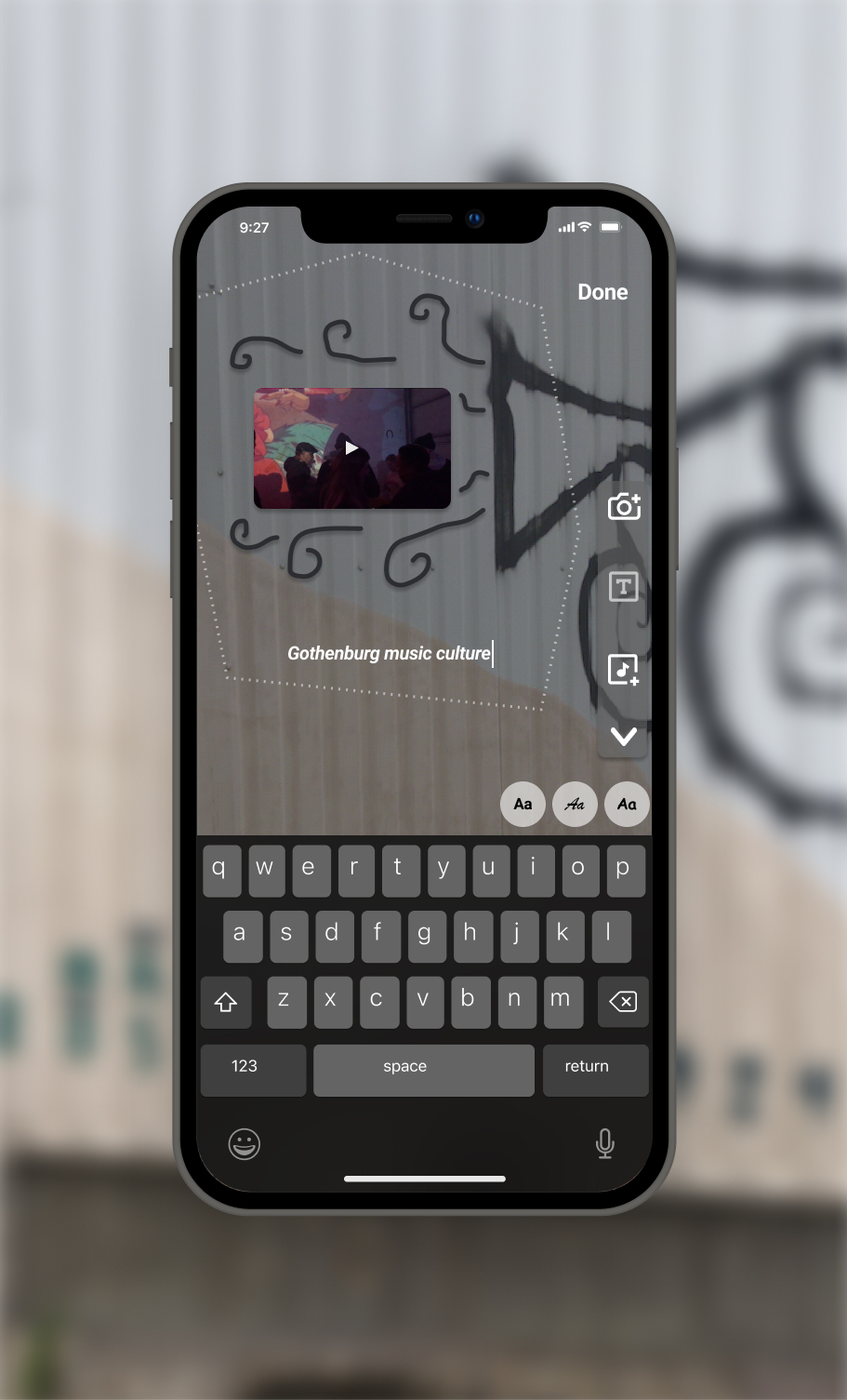
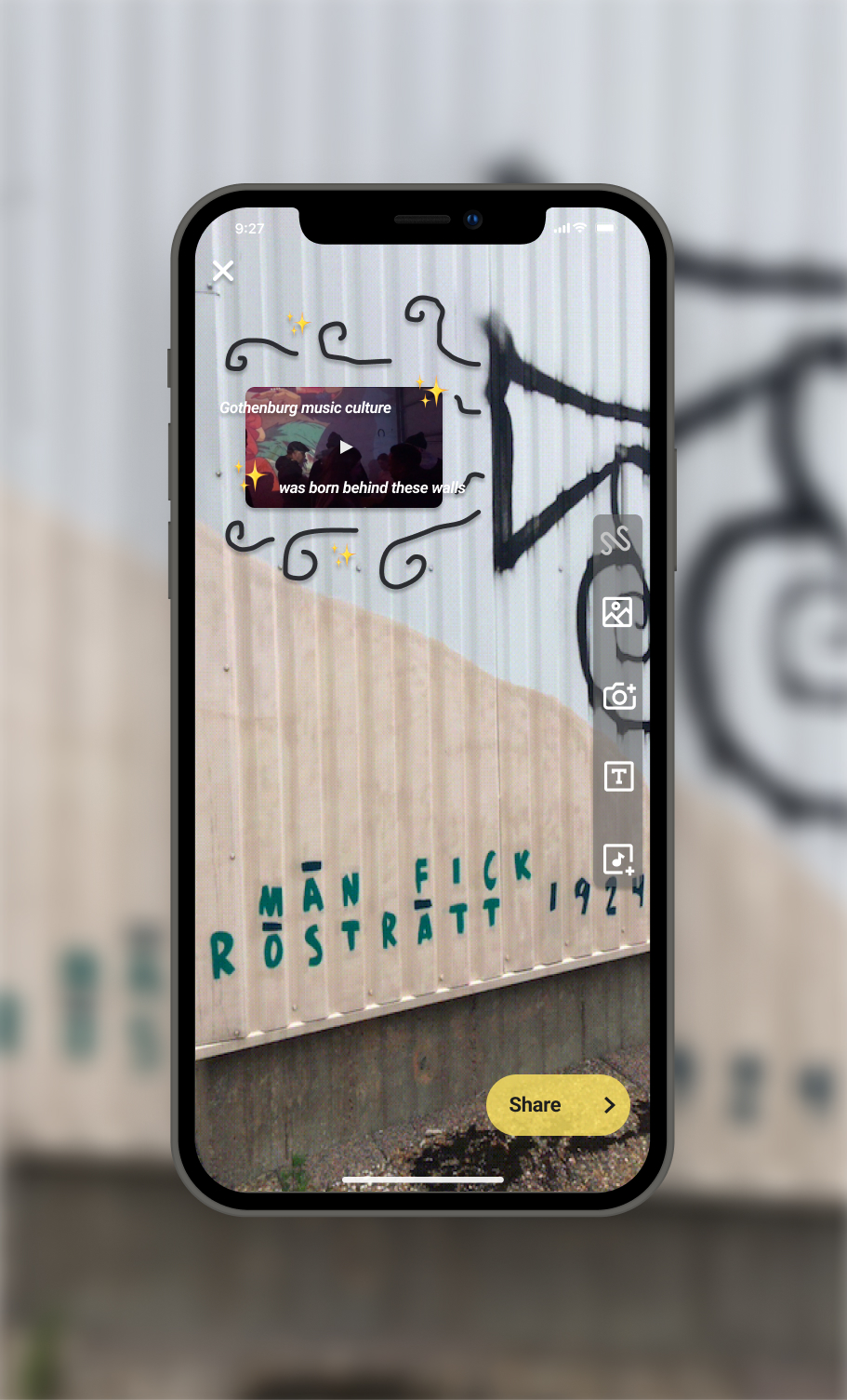
Citizen-side AR content creation — adding text to AR content tied to a Ringön location.
Citizen-side AR content creation — finished AR content placed at a Ringön location.
City official side — viewing and placing location-specific questions in AR as part of the Social Consequence Analysis process.
Result

The physical city and the digital twin could occupy the same space at the same time.

Testing

The workshops surfaced a fundamental tension: a tool designed primarily around city workflows would inherit the city's trust problem.

Workshop 01 · Jacob, traffic department, City of Gothenburg

Citizens were engaging with planning, but often too late for their input to matter.

Format

The first workshop was held online with Jacob, a city official from the traffic department who had also participated in the research interviews. The concept was presented by walking through the user scenario, showing how Augment Your City could fit into the Social Consequence Analysis process. Jacob added notes as he followed along, which formed the basis of a discussion.

Finding

Jacob described how urban planning processes are strictly phased and time-dependent. Citizens are often unaware of the timeline, so many suggestions arrive at stages where they are no longer relevant to the decisions being made. The concept had no answer for this yet. He also highlighted that the ability for communities to communicate internally around shared concerns matters to city authorities: officials who can follow those conversations are more likely to develop empathy toward local values.

Screenshot from the online workshop with Jacob from the City of Gothenburg's traffic department, walking through the Augment Your City user scenario together.
Iteration

The final design introduced a timeline feature allowing citizen contributions to be saved and retrieved when the planning process reached a relevant stage. It also prioritised giving both citizens and city officials a shared space to follow the same conversations, so that officials could build empathy toward local values over time rather than only engaging at formal dialogue stages.

Workshop 02 · Josef, artist at Kiosken, Ringön

If the concept served the city's processes, it would inherit the city's trust problem.

Format

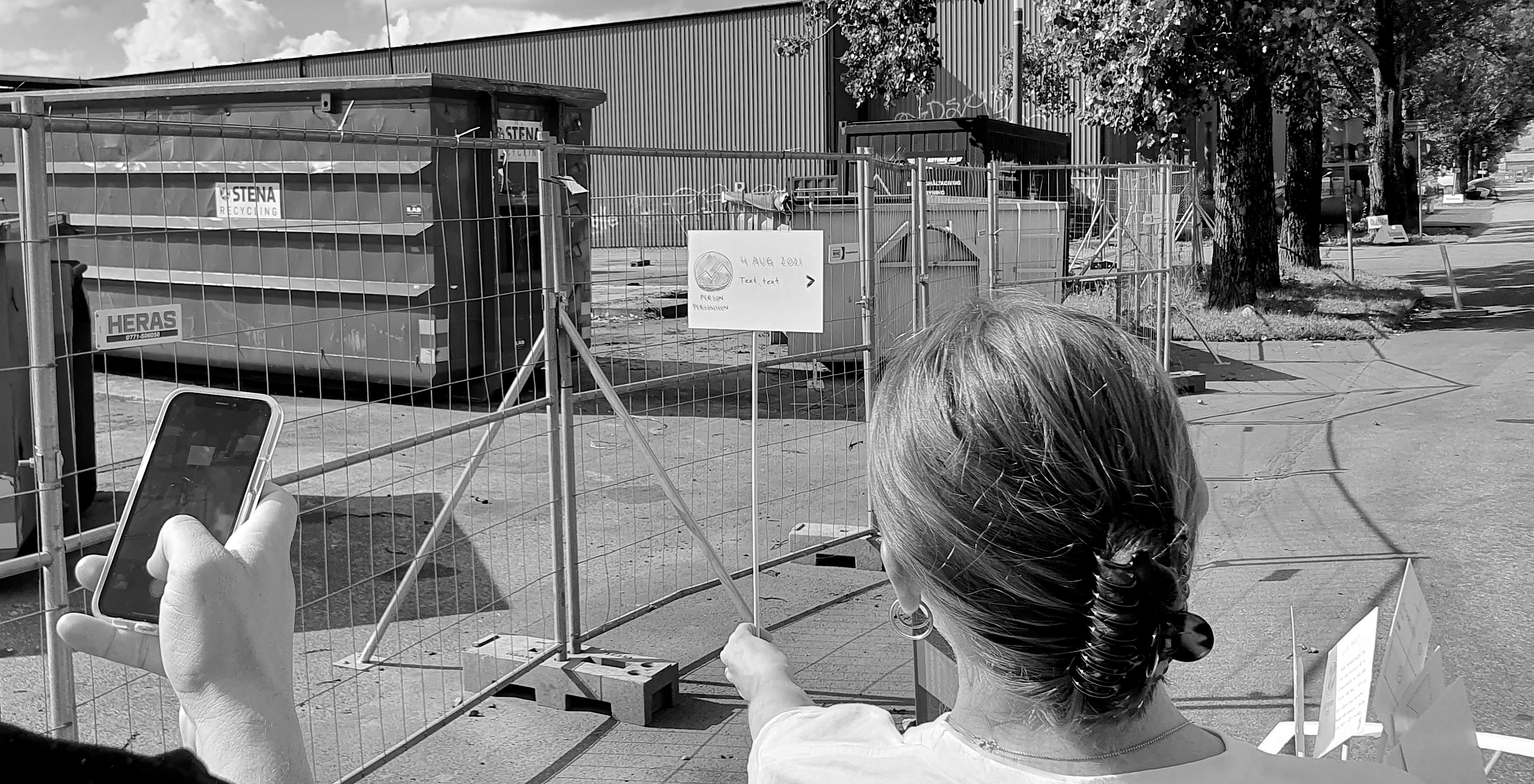
The second workshop was held on-site at Ringön with Josef, the artist from Kiosken who had been part of the fieldwork. Paper signs were used as props to represent AR symbols, and Josef acted through the user scenario from the citizen perspective at the location of the burned-down warehouse. After the roleplay, the experience was discussed.

Finding

Josef expressed that the concept felt designed for the city rather than for the community. He was concerned about who would own the shared data and how it would be used. He said it would be more interesting if it worked less like a city process and more like an exhibition of shared memories, where people contributed not because they were asked to but because the content mattered to them. This echoed what Jacob had raised: trust grows when both sides share the same space, not when one asks and the other answers.

On-site workshop with Josef at Ringön — acting through the Augment Your City user scenario at the location of the burned-down warehouse, using paper signs as props for AR symbols.
Iteration

The final design shifted to allow citizens to share independently of city requests. The city could ask questions, but citizens could also contribute on their own terms. This addressed Josef's concern directly: the data would not exist only to serve city processes, it would exist as a record of what the community valued about the place.

Delivery

Augment Your City brought the social and cultural values of places into Gothenburg's digital twin through citizen-led AR storytelling.

Augment Your City is a smartphone application concept that connects citizens and city officials to Virtual Gothenburg through place-based AR content. It has two distinct sides that together address both problems identified at the start: giving citizens a way to make their values visible, and giving the city a way to reach and understand a broader group of people.

The citizen side

Citizens can create and share AR content tied to the exact physical locations it is about.

Augment Your City citizen-side screen showing the AR map view at Ringön with location markers.
Augment Your City citizen-side screen showing content creation in AR at a Ringön location.
Augment Your City citizen-side screen showing a finished AR contribution at a Ringön location.

Content shared at a location is visible to anyone visiting that place through the app, building a layered record of memories, concerns and values tied to specific places in the city. The format was deliberately social media-like: familiar, flexible and personal, reflecting how the research showed people already expressed feelings about places they cared about.

This responded directly to the user problem: for the first time, cultural practitioners and residents had a way to express and share the social and cultural values of their place, in their own words and formats, from the physical locations those values belonged to.

The city official side

City officials can place location-specific questions and follow citizen contributions as part of the planning process.

Augment Your City city-side screen — placing a location-specific question as part of the Social Consequence Analysis process.
Augment Your City city-side screen — following citizen contributions at a Ringön location.
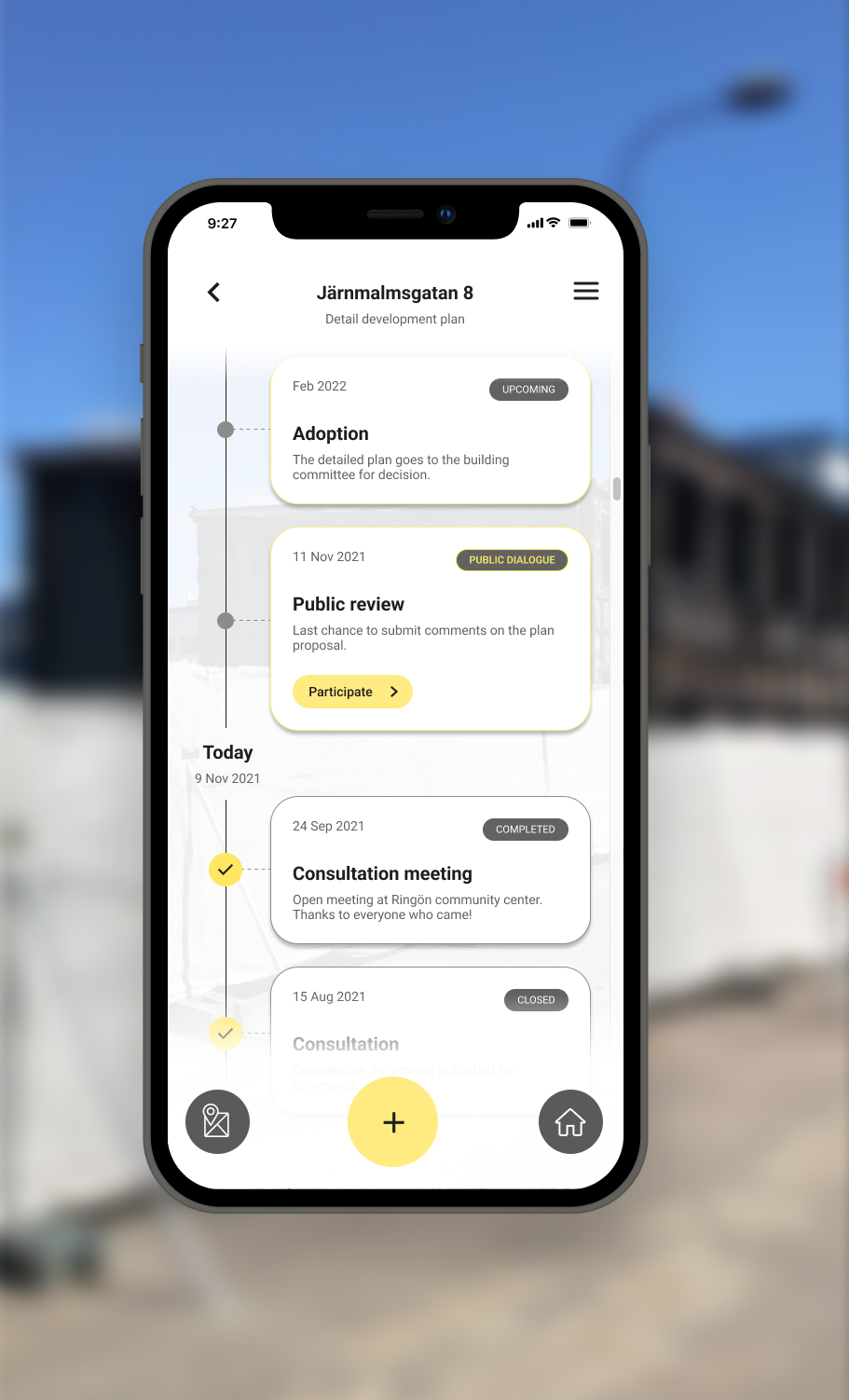
Augment Your City city-side screen — the timeline view that resurfaces citizen contributions at relevant planning stages.

As part of the Social Consequence Analysis process, officials can reach citizens where they are rather than asking them to attend formal meetings. Citizens receive notifications, can respond, or share independently of city requests. A timeline feature saves contributions and resurfaces them when the planning process reaches a relevant stage.

This responded directly to the business problem: the city could now gather place-based insights from a broader group, build understanding of local values over time, and involve communities in planning processes without requiring formal participation.

The connection between them

Both sides feed into Virtual Gothenburg, building a representation of the city that holds lived experience alongside infrastructure data.

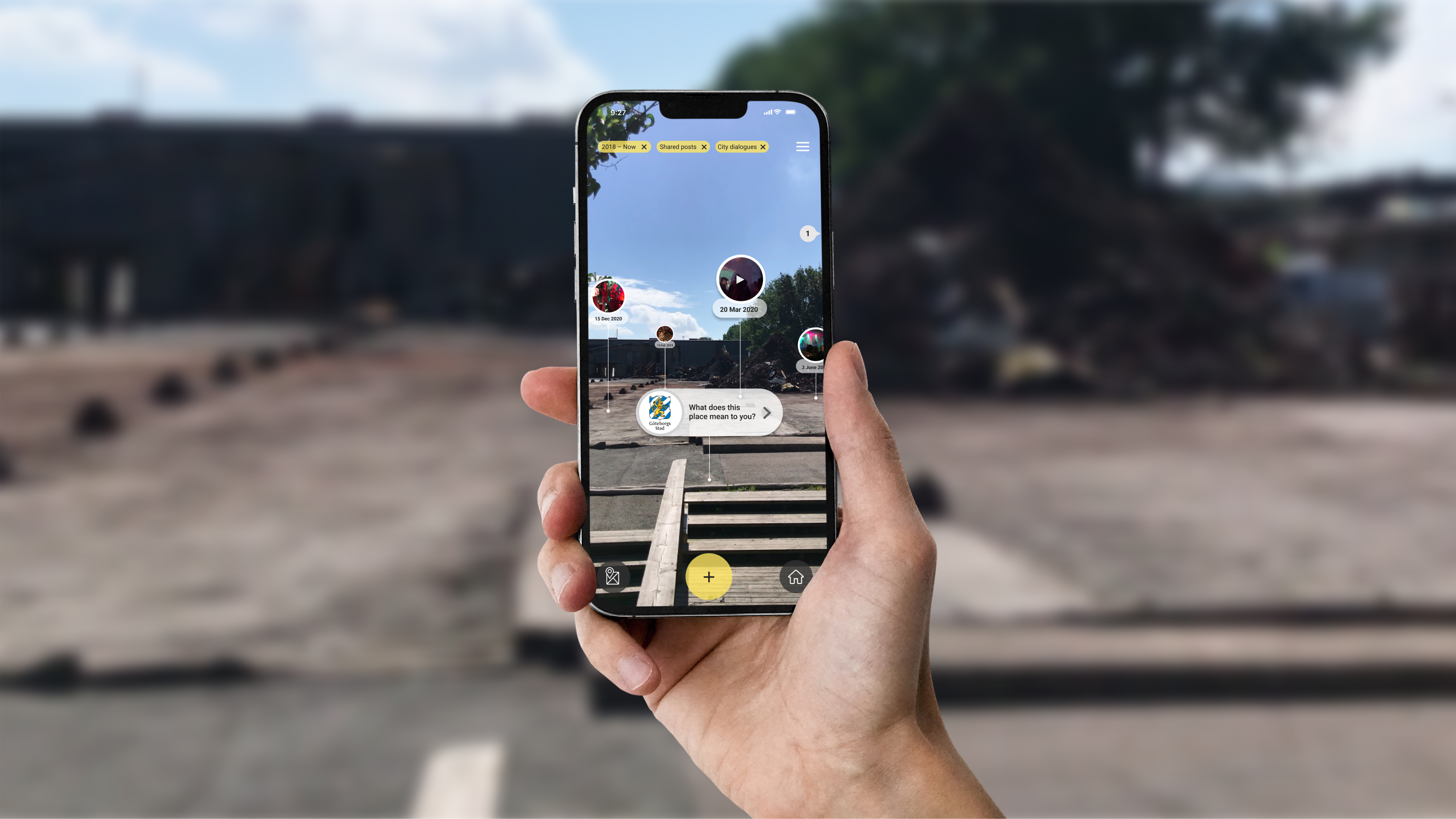
Augment Your City cover image — citizens experiencing AR content layered onto the physical Ringön landscape, both digital twin and physical city occupying the same space.

City officials doing fieldwork can view citizen AR content at the physical location, experiencing the community's voice in context rather than through a report. Citizens and city officials occupy the same digital and physical space at the same time.

Outcomes

A proof of concept for a more participatory digital twin, and a contribution to the research showing why that matters.

Shipped

Augment Your City: a citizen dialogue tool prototype that used AR to connect citizens and city officials to Gothenburg's Urban Digital Twin through place-based content. It gave communities agency to make their social and cultural values visible in the places they belonged to, and gave the city contextual insight as part of the Social Consequence Analysis process.

Significance

For citizens, the significance was agency. A persistent, location-anchored record of their values that existed independently of whether the city was asking. For city officials, it was context: being present at a physical location and experiencing what the community had left there changes the quality of understanding. The project's contribution was a new kind of shared space between two groups that had no common ground before.

The project was recognised as Best Thesis Project 2021 by STIMDI. In 2025 it was featured as a case study in Geodesign, Urban Digital Twins and Futures by Cureton and Hartley, published by Routledge, in a chapter on the importance of bottom-up approaches and citizen-generated data for Urban Digital Twins to address global urbanisation goals. The project is cited as an example of how AR can make the digital twin a participatory layer in the physical city, exploring the possibilities of AR for increasing trust and making local history, values and identities of places visible.

Reflected

The project showed that designing for trust between citizens and city authorities requires engaging with the systems and power structures that shape it. The testing at Ringön made this tangible: Josef's concern about data ownership was a signal that the design needed to address who controls the platform and for what purpose, not just how it looked or worked.

The methodological contribution mattered as much as the design outcome. Taking a critical and democratic stance toward smart city development, and grounding the work in the community's own terms rather than the city's processes, showed that participatory design for urban infrastructure can start from the bottom up rather than the top down. That is what the academic recognition reflects.

" ". .